

Hard water and alkalinity are two of the most misunderstood — and most damaging — problems in a grower’s source water. They quietly push your root-zone pH around, lock out nutrients, and leave scale in your lines, all before you’ve added a drop of fertilizer. Whether you grow cannabis, greenhouse vegetables, or nursery stock, understanding what’s actually in your water is step one. Here’s what you need to know.
Hardness vs. Alkalinity vs. pH
These three get confused constantly, but they’re different things:
| Term | What it measures |
|---|---|
| pH | The acid/base balance right now (hydrogen vs. hydroxide ions) |
| Alkalinity | The buffering capacity — carbonates and bicarbonates, as ppm of CaCO₃ — i.e., how hard the water resists a pH change |
| Hardness | Dissolved calcium and magnesium, the minerals that leave scale |
The key insight, from UMass Extension: when it comes to managing your substrate pH, alkalinity matters far more than the water’s pH. Two water sources can read the same pH but behave completely differently depending on their alkalinity.
Why It Matters
High-alkalinity water acts like liquid limestone. Over time it drives your substrate pH up, and once pH climbs out of range, nutrients lock out even though they’re present — you’ll see deficiencies that no amount of feeding fixes. Meanwhile, hardness (calcium and magnesium) stacks onto your EC, can throw off your cal-mag balance, and leaves scale that clogs emitters and fittings.
How to Test Your Water
Start with a full water analysis — your municipality can often provide one, or you can send a sample to a lab. The UF Extension guide to reading an irrigation water report is a great primer. The numbers that matter most:
- pH — aim for irrigation water in the 5.0–7.0 range.
- Alkalinity — optimum is roughly 30–60 ppm CaCO₃; up to ~100 ppm is workable, above that you’ll be fighting pH creep.
- EC / total dissolved solids — how much is already in the water before you feed.
- Calcium & magnesium — your hardness, and a head start (or excess) on cal-mag.
How to Manage Hard, High-Alkalinity Water
| Approach | What it does |
|---|---|
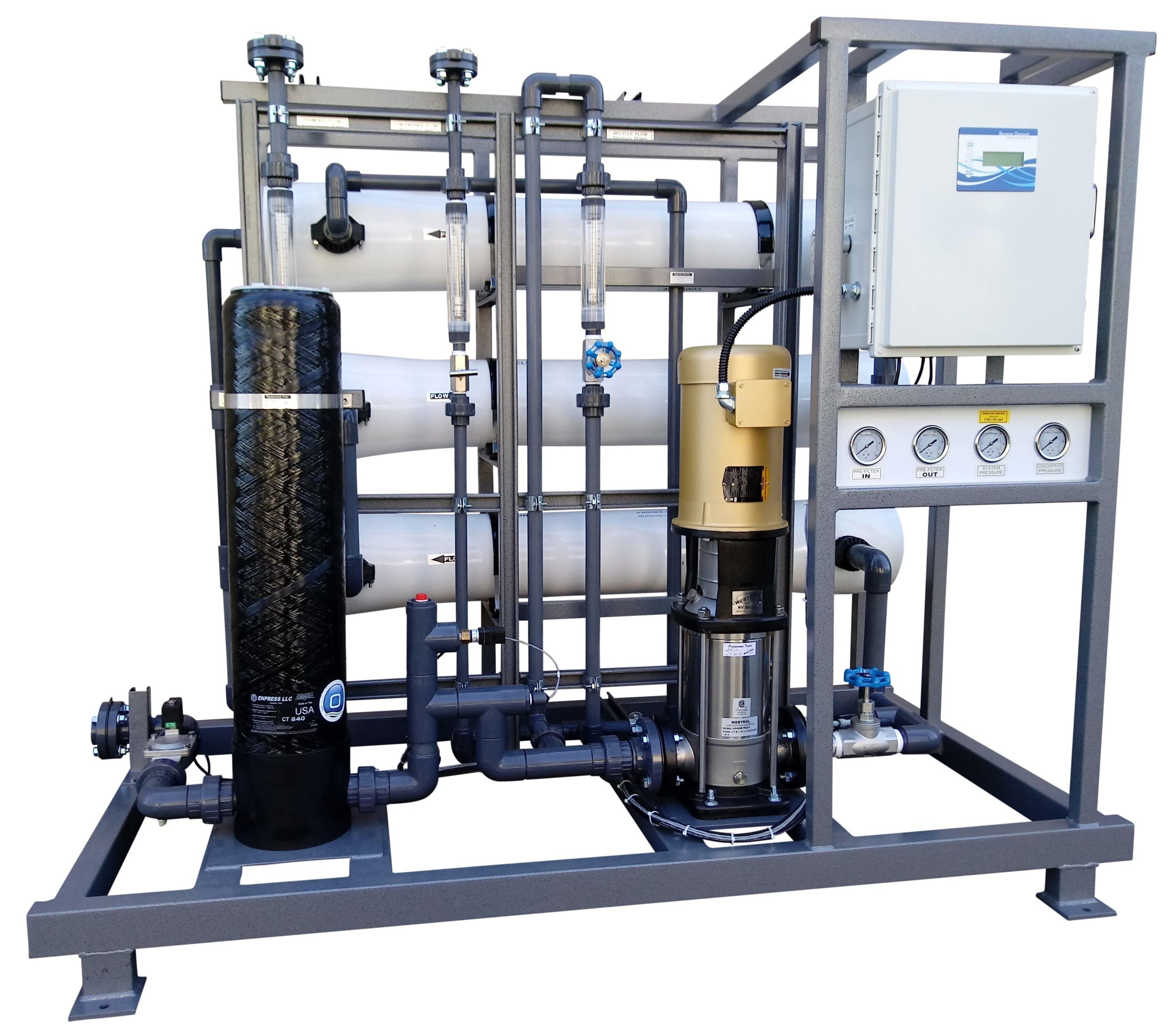
| Reverse osmosis | Strips hardness and alkalinity to near zero for a clean, predictable baseline |
| Acid injection | Neutralizes bicarbonates (with phosphoric, sulfuric, or nitric acid) to bring alkalinity down |
| Adjust your feed | Account for the calcium/magnesium already in hard water so you don’t over-supplement |
| Blend | Mix RO with raw water to hit a target alkalinity instead of stripping everything |
Which you choose depends on your numbers and scale. Growers on very hard or high-alkalinity water often start with reverse osmosis for a clean slate, then build their feed back up with predictable results.
The Clean-Water Foundation
Everything downstream — your pH, your feed, your emitters — is easier when your starting water is clean and consistent. That’s the whole point of front-end water treatment: give yourself a known baseline so fertigation does exactly what you tell it to. It also keeps scale and buildup out of your lines, protecting water quality all the way to the emitter.
Hard Water & Alkalinity FAQ
What’s the difference between hard water and alkalinity?
Hardness is dissolved calcium and magnesium (the scale-forming minerals). Alkalinity is the water’s buffering capacity from carbonates and bicarbonates. Water can be hard, alkaline, or both — and alkalinity is what pushes your substrate pH around.
What alkalinity is too high for growing?
Aim for 30–60 ppm CaCO₃. Up to ~100 ppm is manageable; above that, alkalinity will steadily raise your root-zone pH and cause lockout unless you treat it.
Does hard water affect all crops?
Yes. Any crop grown with irrigation — cannabis, greenhouse vegetables, ornamentals, nursery stock — is affected by high alkalinity and hardness the same way.
Start With Water You Can Trust
You can’t dial in a feed on water you don’t understand. Test your source, know your alkalinity and hardness, and treat accordingly — and everything downstream gets easier. We design water treatment and fertigation systems that give growers a clean, consistent baseline. Reach out and we’ll help you make sense of your water.

Pre-Harvest Flush: How (and Whether) to Flush Your Crop
The pre-harvest flush is the final step of the grow — the stretch where you stop feeding and water with plain, clean water to clear

Biofilm & Clogged Emitters: Keep Your Drip Lines Clean
A clogged emitter is a plant that isn’t getting fed. It happens quietly — one dripper slows, then a few, and suddenly you’ve got dry
Hard Water & Alkalinity: What Growers Need to Know
Hard water and alkalinity are two of the most misunderstood — and most damaging — problems in a grower’s source water. They quietly push your
Root Rot & Pythium: How to Prevent and Treat It
Root rot is the silent killer of the grow room. By the time you see it up top — wilting, yellowing, stunting — the damage
Pre-Harvest Flush: How (and Whether) to Flush Your Crop
The pre-harvest flush is the final step of the grow — the stretch where you stop feeding and water with plain, clean water to clear
Biofilm & Clogged Emitters: Keep Your Drip Lines Clean
A clogged emitter is a plant that isn’t getting fed. It happens quietly — one dripper slows, then a few, and suddenly you’ve got dry
Hard Water & Alkalinity: What Growers Need to Know
Hard water and alkalinity are two of the most misunderstood — and most damaging — problems in a grower’s source water. They quietly push your
Root Rot & Pythium: How to Prevent and Treat It
Root rot is the silent killer of the grow room. By the time you see it up top — wilting, yellowing, stunting — the damage